Français
  Português
  עברית
עברית  Español
  Svenska
  日本語
日本語  繁體中文
繁體中文  Denmark
 Norway
 German


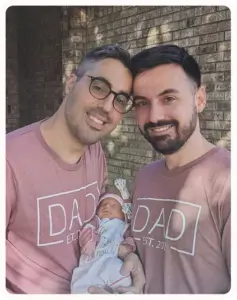


In recent decades, surrogacy has become not only a gateway to parenthood for individuals and couples unable to conceive traditionally, but also a window into progressive perceptions of family, belonging and modern parenting.
Whether it’s a single-parent family, a two-father couple, a two-mother couple, or a heterosexual couple – nearly every surrogacy journey includes cherished figures who may remain “behind the scenes” but often serve as the emotional backbone of the entire process: the grandparents.
Research Shows: Grandparents as an Emotional Anchor
Research in developmental psychology consistently shows that the active presence of grandparents in a child’s life significantly contributes to emotional security, social development, and a strong sense of intergenerational belonging.
A study published in the Journal of Family Psychology found that children who have meaningful relationships with their grandparents develop higher levels of empathy, positive self-image, and better coping skills in changing situations.
A Particularly Important Role in LGBTQ+ Families
In LGBTQ+ families with a single father or two dads, the grandmother often becomes the primary and central female figure in the child’s life. Beyond practical help, she provides emotional mediation, a different perspective on the world, and sometimes even a complementary parenting experience that gives the child a sense of balance and emotional depth.
Similarly, in families led by a single mother or two mothers, the grandfather can play a crucial masculine role in the child’s world – not necessarily as a parent, but as a warm, consistent, and loving figure of authority.
This is not an attempt to “enforce” a traditional family model, but rather an opportunity to offer emotional richness and human diversity through choice, love, and acceptance.
A Vital Support Network for Single Parents
Among single parents – both men and women – grandparents often take on a near-parental role. Whether it’s accompanying medical appointments, serving as regular babysitters, providing financial support, or simply being a listening ear during difficult moments – they are there.
Their support is not only practical but also deep: it strengthens the parent’s sense of capability, offers space to breathe, and creates a rich and varied emotional environment for the child.
Acceptance and Support – Not Just Moral, But Essential
Surrogacy, especially when it occurs within non-traditional families, may challenge grandparents – but it can also open the door to a new experience of acceptance, compassion, and personal growth.
When parents realize their right to parenthood through non-traditional paths, the response of their own parents – the support, the willingness to be involved, and the trust – sends an important message: Love for family is not dependent on biology, gender, or structure – but on the heart, on action, and on the willingness to truly be there.
The Child as a Bridge – Surrogacy as a Path to Healing and Reconnection
In many cases, especially in families where the parent is part of the LGBTQ+ community, the relationship with the grandparents wasn’t always simple or self-evident.
Coming out, straying from the “normative” path, and choosing to create an alternative family can trigger emotional difficulties, distance, and even a sense of loss for the grandparents – even when rooted in love.
But often, the very child born through surrogacy becomes a bridge between generations.
This new miracle in their lives often softens perspectives, breaks down barriers, and connects hearts. The child brings not only joy, but also an opportunity to start anew:
For LGBTQ+ parents – to be seen not only as partners, but as parents.
For grandparents – to once again feel a part of a vibrant, loving family.
Does the Biological Connection Matter to Grandparents?
One of the common questions that arises during the surrogacy journey – especially among intended parents who rely on egg or sperm donation – is whether grandparents will “feel” less connected or loving toward the grandchild if there is no direct biological link.
It’s a natural and legitimate concern, stemming from vulnerability and the emotional weight of letting go of a genetic bond. But the reality – reflected in countless personal stories – tells a different tale.
Many grandparents report that from the very first moment they held the baby – or even saw an ultrasound – there was no question of “biological belonging.” The connection was emotional, immediate, and authentic. The grandchild became part of the family, the heart, the identity – even without shared DNA.
Current research in developmental and family psychology shows that a grandparent’s love for their grandchildren is driven primarily by emotional connection, closeness, shared time, and family identity – far more than by genetic ties.
True, some grandparents may initially raise questions about biology, but in most cases – with time, and especially with bonding – the biological component fades in favor of a living, lasting, and nurturing relationship.
Over the years, we’ve seen grandparents embrace grandchildren born through egg donation, sperm donation, surrogacy, or adoption – and love them as deeply as (and sometimes even more than) their other grandchildren, precisely because they understand the depth and significance of the journey that brought the child into the world.
A Journey That Spans Generations
Grandparents hold your hand during the wait, caress the surrogate’s belly over video calls, celebrate the birth, and are present every day – not just as babysitters, but as a warm circle of love around the child.
This intergenerational bond, which often begins even before birth, is a circle of roots and wings: It offers the child a deep sense of belonging to a human, loving lineage – even when there is no direct genetic connection.