Français
  Português
  עברית
עברית  Español
  Svenska
  日本語
日本語  繁體中文
繁體中文  Denmark
 Norway
 German


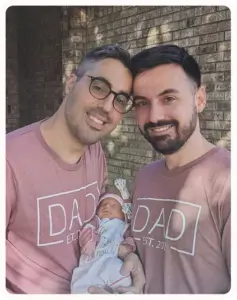


In preparation for Pride Month, we interviewed Dr. Ashim Kumar – a certified endocrinologist and director of the leading fertility clinic Western Fertility Institute in California. Dr Kumar has many years of experience in the fertility field and awareness of the challenges of the surrogacy journey.
In recent years, Dr. Kumar has focused his efforts on couples who had difficulty conceiving and required assistance from a third party (egg donor and/or gestational surrogates).
Can you share your background and experience in the field of IVF and surrogacy?
I graduated at University of California LA Cedars-Sinai in 2005. It was a combined fellowship program in Thousand Oaks. I was a new employee. There were two physicians there already, and they carved out the referral sources from all the local doctors. To have my own little niche, I started working with a lot of the agencies that were bringing patients over from Europe. The first couple was from Italy. We quickly became one of the largest providers for gay men in Italy and that was a great area for me to be in.
I love working with the individuals, the couples, the fact that they would travel halfway around the world, trust us with the birth of their child and with the small fortune it takes to pursue surrogacy in another country, trusting us that their dream would be brought to fruition. It was wonderful. We would travel to Italy every now and then and be able to meet with the families, which was really very special.
So, one thing led to another and the word of our clinic and me spread. Then the China market exploded as well, and we had several people approach us to service Chinese clientele. And that blossomed.
About 10 years ago, I met Doron (founder of the Tammuz family). He’s really one of the nicest people I’ve ever met. We met quite a few times thereafter and I started working with Tammuz. We’ve had a great experience with them ever since. I think the level of professionalism they exhibit is amazing and the collaboration has been excellent. We are very receptive to each other’s needs and to the needs of our parents.
How long have you been working with surrogacy cases for gay and heterosexual couples?
I did my fellowship in reproductive endocrinology and fertility. I’ve been working with surrogacy pretty much since 2005, so 19 years. I do 400-500 surrogate embryo transfers a year. When I first started, I was doing 150-200 cases of egg retrieval a year. And now we’re at about 450 plus cases a year of retrieval. Previously, we did a lot of ovulation induction or superovulation with intrauterine insemination. Most of what we do now is in vitro fertilization, frozen embryo transfers.
Can you walk us through the typical IVF and surrogacy process for intended parents?
In terms of the IVF experience for gay men, quite often it starts with a consultation over the phone, on Zoom, etc to discuss the medical history, some treatments that may be needed, and the timeline for the process. And then the intended parents travel to the clinic. We do semen analysis and cryopreservation. At that time, the FDA infectious disease panel is carried out, as well as the genetic carrier screening. Then, they can choose the egg donor. It will either be a fresh retrieval which will be fertilized with the sperm or frozen eggs would be bought and fertilized with the sperm.
The embryos are fertilized using a process called intracytoplasmic sperm injection (ICSI), where we directly inject a single sperm into each egg. The embryos are then cultured into the blastocyst stage. At that time, a laser is used to cut a notch in the cells from the outer cell mass, which will become the placenta and the bag around the baby. A few cells are removed and sent for testing. The remainder of the embryo, so the inner cell mass which will become the baby itself, is not touched at all. The embryo is then frozen in liquid nitrogen. About ten days later, we get the results from the laboratory as to how many euploid versus aneuploidy embryos we have, and as a byproduct, if they are male or female.
We work with Tammuz to clear the surrogates for the intended parents. We mainly go through their medical histories to make sure they haven’t had any obstetrical complications. After the match, we set up a consultation with the surrogate and she goes through the appropriate testing. After the legal contract is completed with the surrogate, we create a transfer calendar with a medication regimen and the transfer date.
On the day of the transfer, the embryo/embryos that are chosen by the intended parents and Tammuz are thawed and transferred to the surrogate. In the clinic, I follow the surrogate until about 10, 11 weeks (about 2 and a half months) gestational age. Thereafter, the surrogate’s own obstetrician takes over.
Are there any differences in the process between gay and heterosexual couples?
We’ve been working with both heterosexual and gay parents since 2005. I see no difference in terms of how we take care of the intended parents. The way I see it, there are three aspects to treatment: the medical process, the emotional process, and the financial process. For surrogacy, the medical and the financial are the same for both gay and heterosexual couples, but the emotional aspects are different.
Sometimes, heterosexual couples will come with an elective desire to undergo surrogacy. In those cases, there’s not this emotional trauma that they’ve had to work through to get to the surrogacy experience. But most heterosexual couples I see have attempted years of IVF, multiple transfers into their uterus without success, or had miscarriages or something else tragic happen. And now they’ve progressed to surrogacy. In those cases, there’s a lot of emotional baggage that they must deal with. I think it’s important to address it early so that it’s not an ongoing issue for the remainder of the pregnancy.
A lot of heterosexual couples do want to use their own eggs. Whether this would be the best choice mostly depends on the age of the individual. We do have couples where it might be a second marriage, or they got together later in life and just want to use donor eggs, the partner’s sperm and the surrogate. They don’t want to deal with the possible complications of pregnancies.
What are the key medical considerations you consider when selecting a surrogate? How does the screening process work?
We follow the American Society for Reproductive Medicine guidelines. With every surrogate, we carefully look through their medical history to make sure that there weren’t any obstetrical complications. If there’s any doubts, we get the advice of a high-risk pregnancy specialist, rather than solely trust my judgment. I think it’s important for me to get an unbiased opinion. We also do a physical exam, sometimes we do a saline infusion sonogram. I do not recommend tests like ERA or others. Those tests have been proven to be ineffective and I think quite often can take us down an incorrect path and lower our chances of success.
How do you ensure the health and safety of both the surrogate and the baby throughout the pregnancy?
We are responsible for the pregnancy until week 11 (about two and a half months).We ensure the health and safety of the surrogate and the baby by doing our homework. Before we transfer the embryo, we check the embryo to make sure that it’s genetically viable. And we make sure that the surrogate is a good candidate for the pregnancy. During the first trimester, we monitor the surrogate closely with the ultrasounds and bloodwork every few weeks. And we’re always available 24/7 if there are any issues. Then the care is shifted to the obstetrician and the wonderful people at Tammuz.
What are some common challenges or complications that can arise during the IVF and surrogacy process?
It’s mostly common day-to-day stuff – reaching the surrogate, surrogate compliance. A lot of the surrogates are not local. But we do have several nurses who are offsite, which means that they don’t see patients that come in every day. That frees their mornings and afternoons to be able to take care of our out-of-town clients and they can get on the phone or on Zoom and show people how to use medications. Just do a lot of hand holding and follow up so you can feel nurtured through the process and have great communication with everybody involved.
What factors should gay couples consider when choosing an egg donor and a surrogate?
I think choosing an egg donor needs to be done in conjunction with the physician and clinic. I would choose three to four characteristics that are important – perhaps education, height, hair color, eye color, even personality. Too many criteria would mean it’s impossible to find somebody, too few then there are probably too many candidates.
If you are choosing between two or three donors, run it by the clinic to see the donors’ reproductive potential. Who has made better embryos or has the potential to make better embryos for them? I would consider that before making a final decision.
In terms of the surrogate, it is the agency and the clinic’s job to make sure that they can trust the surrogate for the next 12, 14 months. I think when it comes to surrogates the natural tendency is to choose someone very young. I would caution against that because I can tell you that we were not as responsible people in our early 20s as we would be in our 30s. If I want to trust someone with the health of my unborn child for nine months, I’d rather trust somebody that’s a little more mature and situated in life.
What types of support and resources do you provide for IPs through the surrogacy journey?
We pride ourselves on having a third-party coordinator that can respond to questions within 24 hours, and offsite nurses who understand the importance of communication, of keeping the intended parents and the agency updated. We’ve learned a lot with Tammuz, and systems have been developed where communication is excellent. I think that’s the most important part in terms of support.
In terms of other resources, we do have a sperm bank and an egg bank. We have frozen eggs as well as fresh donors available. We can work with any donor or international surrogacy agency. We have a wealth of options available to the intended parents. We offer hand holding and nurturing for emotional support, which is important. We can also accept sperm, eggs, and embryos from all over the world, which we ship over easily. We’ve ironed out any potential issues for the couples. I think that’s important too.
What are the common fertility issues that heterosexual couples face, and how do you address them?
We primarily deal with diminished ovarian reserve and see patients with uterine factor infertility. That would require surrogacy. It’s not common generally, but it’s a common one for us because that’s why those individuals would seek out Tammuz and Tammuz would refer them to us. There’s male factor infertility as well.
How do you determine if surrogacy is the best option for a heterosexual couple?
Sometimes, needing surrogacy is quite obvious. We had a couple from Demark where the female partner had Mayer-Rokitansky-Kuster-Hauser Syndrome, which is mullerian agenesis. One out of every 4,000 women are born without a uterus or fallopian tubes, and it’s quite obvious that for her to have a child, she would need to use a surrogate. On the other hand, there are some individuals who want to use a surrogate for health reasons, such as cardiac disease or a history of malignancy. There could be repeat implantation failure where they’ve gone through multiple transfers without any diagnosis. And some people do it electively.
What advice do you have for intended parents on maintaining a positive relationship with their surrogate?
The best advice I have for intended parents is to be able to put their surrogate on a pedestal and appreciate all the effort that she puts in. I think we don’t understand all the hoops she has to jump through, all the appointments she has to go to. And this is in addition to her having a job and a family. So, she has to play the role of a spouse, a mother, an employee and go to all these appointments for you. She also needs to take care of herself in meeting her physical and emotional needs. And that’s a lot.
Intended parents should be able to acknowledge all of that and relay that to her positively. If there are any issues that come up, I would go through your agency. That’s their job, to be a buffer and to see what the reality is. Sometimes, maybe the surrogate needs to shift her behavior pattern. Or maybe your interpretation of something that she’s doing that’s incorrect is not incorrect. So, that’s where the agency is important. They have such a wealth of experience that they know how to negotiate those issues.
How do you see the future of surrogacy evolving from technical, medical, moral aspects?
Being able to figure out implantation, how it works and how we can identify those with a higher chance would be wonderful. Technically speaking, the medication regimen really mimics what happens in a normal ovulatory cycle. So, I don’t think that there’s a whole lot of refining to be done there. In terms of the moral aspects, the Swedish Commission on Surrogacy looked at how surrogacy would be done in an optimal ethical fashion. And they came up with certain guidelines.
If you see how surrogacy is done in the U.S., it meets those guidelines. So, I think it’s done very fairly. Just like we all expect to get compensated for our effort, to say that these individuals give of themselves physically and emotionally but shouldn’t be compensated for it is not fair. It also seems unfair when people talk about renting the uterus or that they’re selling their physical body. If a day laborer carries bricks upstairs all day, how is that different? We all have certain things we bring to the table – a strong physical stature, an impressive intellectual ability. We all use whatever ability we have to better society as a whole and better our community. And to be able to say that one part of it shouldn’t be compensated and another should seems at times misogynistic.
Thank you Dr. Kumar, for your invaluable contribution in helping people achieve their dream of starting a family, and we wish you many more years of success!