Français
  Português
  עברית
עברית  Español
  Svenska
  日本語
日本語  繁體中文
繁體中文  Denmark
 Norway
 German


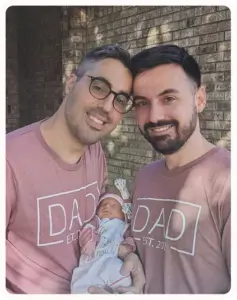


Raising children born through surrogacy brings with it many special moments, and also unique challenges. One of them is dealing with your child’s questions about their origin and how they came into the world. It is important to remember that every child is different and will come to these questions in their own time and at their own pace.
There is no “right” way to answer, and the most appropriate response depends on each family’s unique circumstances. However, there are some general principles that can help you deal with these questions in a sensitive and appropriate way, such as honesty and transparency, using stories and of course emphasizing your love.
Here you can read a fascinating and important article on “How I came into the world” – dealing with the questions from children who were born through surrogacy, by Dr. Ilan Tabak Aviram,
an expert clinical psychologist, who will provide you with information and tools in the process.
During their development, children gradually begin to deal with the question “how did I come into the world” and turn to their parents with difficult questions. Sometimes, they are left alone with the questions and develop their own theories and hypotheses about how their family was formed, and not always in a realistic and accurate manner. Dealing with this question is essential for every child forming their identity, and therefore has occupied the world of psychology since Freud.
In the case of families that go through a surrogacy process, the process of bringing a child into the world is a complex process in all respects: technically, medically and emotionally, and the answers are not so simple. Many parents find themselves struggling to answer the child and sometimes this is a concern of potential parents, even before starting the parenting journey. In this article I will try to formulate a number of simple principles that can help parents deal with this challenging situation.
The Importance of Creating a Family Narrative
Drawing from past experiences with children adopted at an early age, we understand that it is easier for children to process their personal story when the narrative of their arrival into the world and into the family is presented to them in an honest and open way, as early as possible, and in the form of a structured children’s story. We must remember that children don’t grow up in a vacuum, and even at a young age in kindergarten, they are asked complex and curious questions about their family and how they were born. Without well-defined and prepared answers, they will feel embarrassment, shame, and even social rejection. Over time, this can create a negative cumulative experience for them.
Guiding children through their birth story
As parents, it is our responsibility to take charge and guide our children through the process of understanding their birth story. While we shouldn’t wait for them to ask questions, we also need to be mindful of their age and personality. Some children are naturally curious and may actively seek out information, while others may avoid the topic altogether for various reasons. Children who are avoidant need our extra attention and initiative to learn about their origins. However, we should not force them to engage with the subject if they prefer to avoid further discussions after the initial disclosure.
Often, it is convenient to bring up the topic and sit with the child in front of their birth story album in preparation for a family day that is celebrated in kindergartens. This is a golden opportunity to deal with the subject in a way that is not forced. Sometimes, it is natural to bring up the topic around a birthday, or if the birth of a younger brother or sister is expected, this is another opportunity to talk about it.
It is also recommended during the early stages of the pregnancy and parenting process, to document and collect memories and moments that can later add content to the family story. Your photos of traveling to fertilization and of the pregnancy and the ultrasound can later illustrate for the child how they came into the world and create a clear picture for them of the process that was their entry ticket into the world.
Many parents invest in preparing an album or book that tells the story of the birth verbally and visually, and these initiatives make the story much easier to access and take priority over having a formal conversation, which is less appropriate at younger ages.
An evolving story with age
The story of family creation is a fundamental part of a child’s identity, and it is therefore best to start telling it early, as early as the beginning of language acquisition, starting at the age of two. Of course, we will tell it in a way that is appropriate for their cognitive development.
Initially, we will mainly explain through pictures and photographs the pregnancy in the surrogate’s belly, our parents’ wait for the birth, and our presence from the moment of birth onwards.
Children at the age of four can already understand the basic medical process for example. It is better to explain with general concepts of egg, sperm, womb-abdomen, and not to go into detail beyond that. It is important to explain why another woman will carry the pregnancy, and to use the explanation that “boys cannot hold a baby in their stomach”.
It is important to treat the surrogate as a significant and important person, but as a figure who is not part of the nuclear family and as someone who helped at a critical stage in the past. Later in elementary school age and beyond, it is possible to talk about, in more detail, egg donation, the identity of the egg donor and how the fertilization process is carried out.
The more we share the story of surrogacy at a young age, the more natural and less unusual it will be perceived. Children who grow up knowing that they were born in the womb of another woman tend to see this as a matter of course, not to attach too much importance to it and not to feel shame about it.